
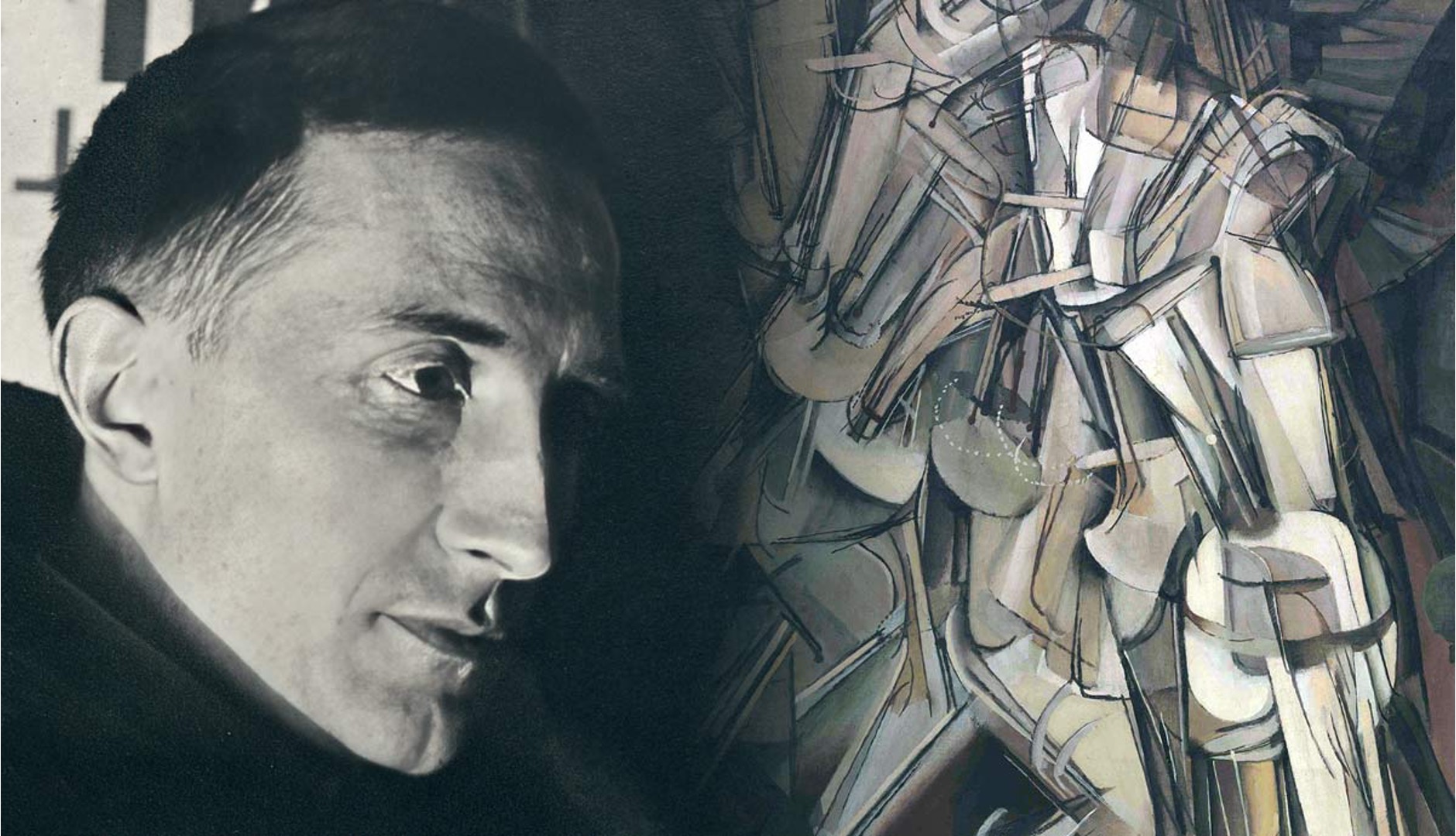
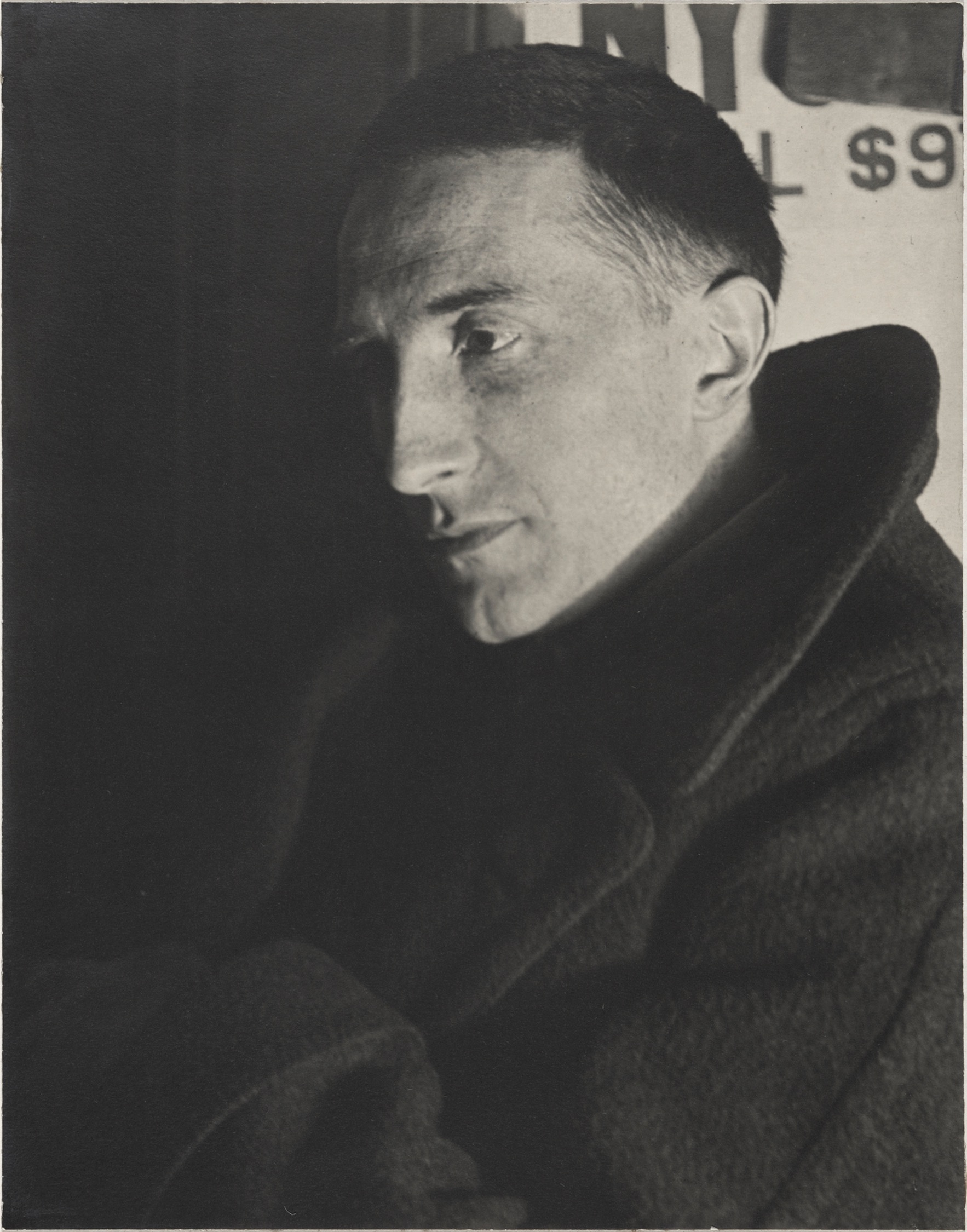
Marcel Duchamp was born on July 28, 1887, near Blainville, France. In 1904, he joined his two brothers, Jacques Villon and Raymond Duchamp-Villon, in Paris, where he briefly studied painting at the Académie Julian. His early work was in the Post-Impressionist style, and he made his debut in 1909, exhibiting at the Salon des Indépendants and Salon d'Automne. By 1911, Duchamp’s paintings were inspired by Cubism, showing a sequence of images that captured bodies in motion. In 1912, he painted Nude Descending a Staircase, a work that caused a stir when shown in the Salon de la Section d’Or in Paris and later at New York’s 1913 Armory Show, where it sparked even more debate.
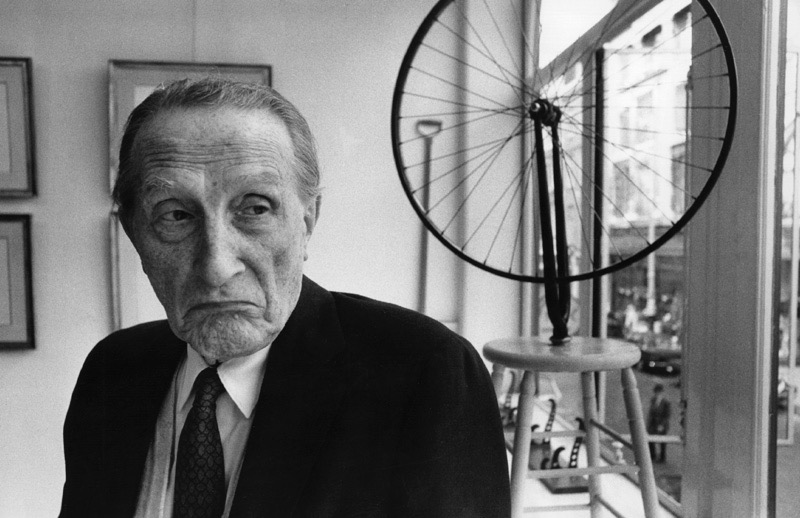
Looking for a new way to showcase art, Duchamp started to use actual objects instead of just painting them. He picked everyday, mass-produced items that you could find anywhere and called them art, giving each one a title. He referred to these pieces as “readymades,” and they really shook up the traditional idea that artists should be skilled creators of unique, handmade works. Duchamp believed that just by choosing an ordinary object, it could be transformed into a work of art. These readymades also challenged the idea that art had to be beautiful. Duchamp said he picked these common items because he felt indifferent to their appearance, with no concern for good or bad taste. By doing this, he opened the door for Conceptual art, which focuses more on ideas and concepts rather than just being visually pleasing.
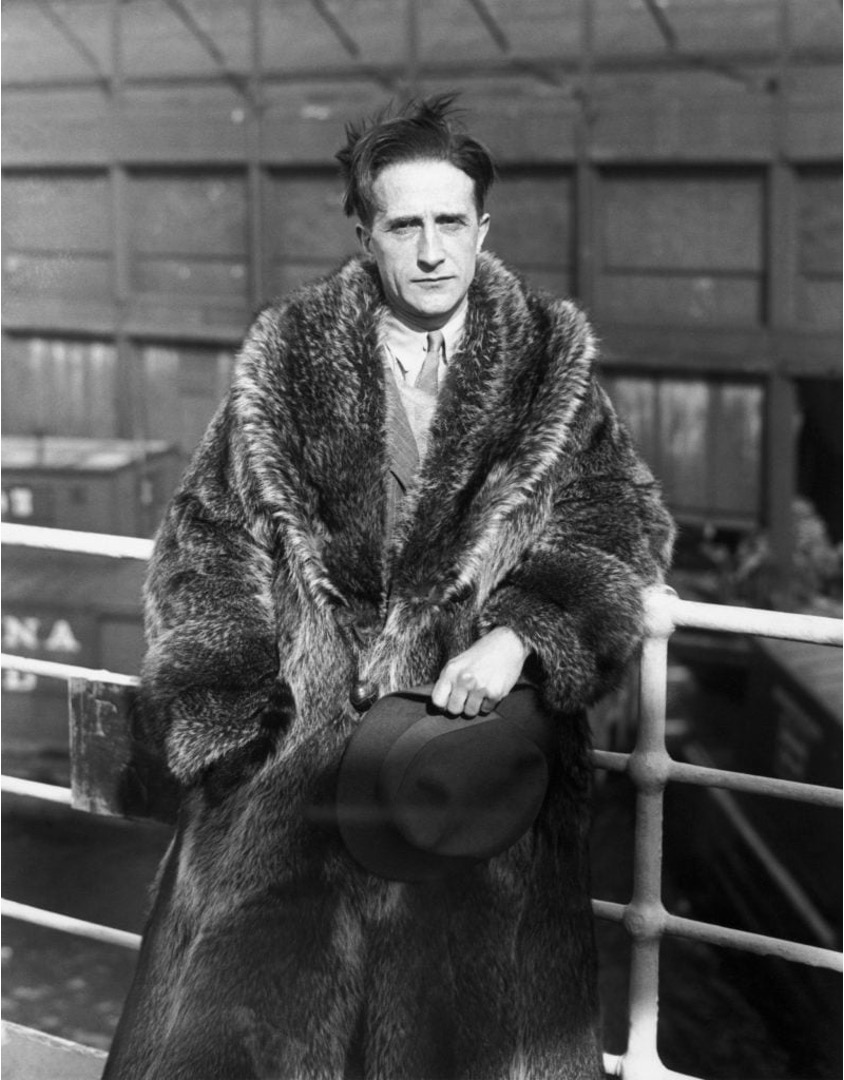
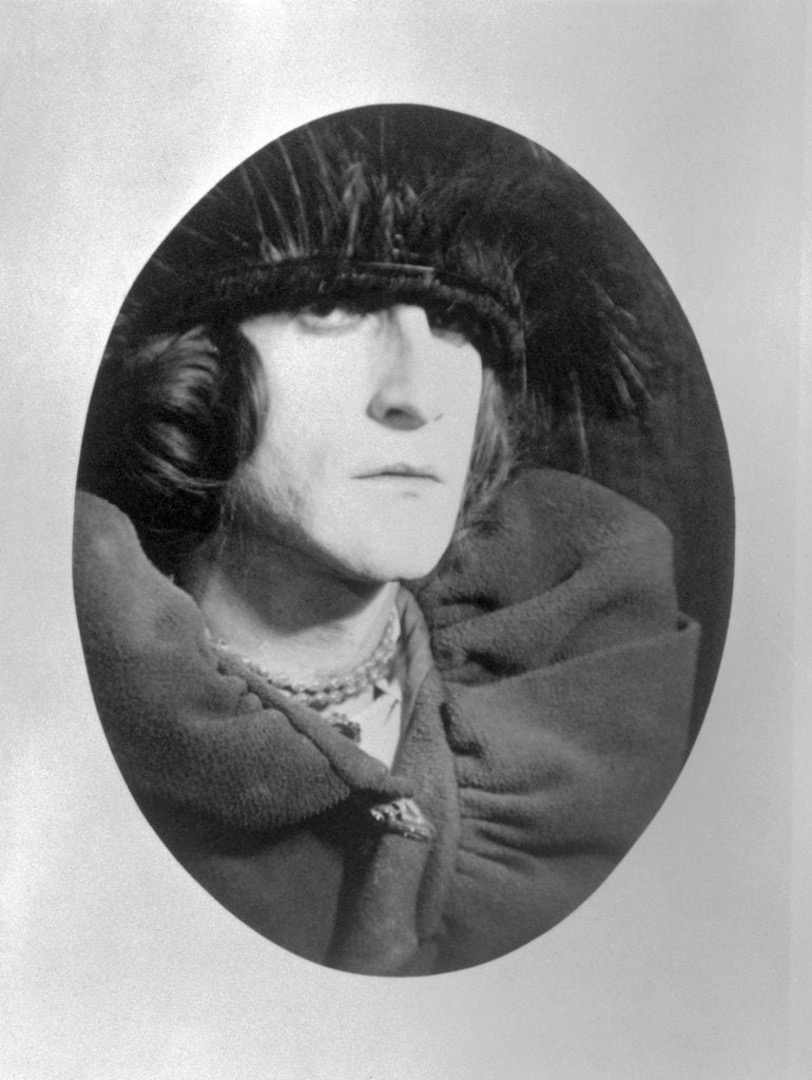
Duchamp’s female alter ego Rrose Sélavy made her debut in 1920. Soon after, she began popping up in photos taken by friend Man Ray, who was a fashion photographer, artist, and an unofficial member in the Dada movement. Rrose perfectly embodied Duchamp’s clever use of language and all the playful irony that Dadaism was known for. Her name is a play on the French saying “Eros, c’est la vie,” (“love [or sex], it is life”) which has inspired everything from surrealist poetry collections to an oyster bar in Manhattan. As with most of his work, Duchamp goal was to break barriers, test the boundaries of culture and to re-think how we view art, the world and ourselves.
After he withdrew from the art world, Duchamp remained a passive, if influential, presence in New York avant-garde circles, inspiring Neo-Dadaist artists Robert Rauschenberg and Jasper Johns. Though he devoted much time to studying chess, Duchamp worked in secret on a three-dimensional realisation of The Bride Stripped Bare by her Bachelors, Even, entitled Etant donnés (Philadelphia Museum of Art) during the last twenty years of his life. Marcel Duchamp died in 1968 and was honored posthumously by retrospective exhibitions in major institutions in both France and the United States.